


 346-200-6097
Why Social Media Evidence Requires More Than Screenshots
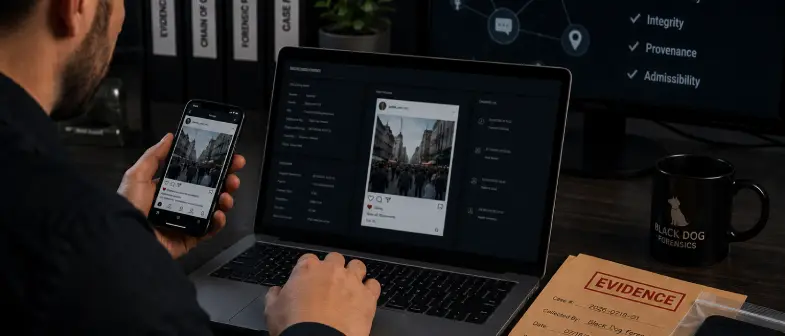
A key social media post disappears just days before the trial. An employee deletes comments during an internal investigation. A fraudulent account changes its content before investigators can preserve it. In situations like these, relying on screenshots or manual records may leave important questions about the authenticity and integrity of the evidence unanswered.
At Black Dog Forensics, we help attorneys, investigators, corporate legal teams, and law enforcement preserve, analyze, and document social media evidence using established forensic methodologies and specialized forensic technology. Understanding social media forensics is the first step toward protecting valuable digital evidence before it changes or disappears.
Understanding Social Media Forensics
Every day, social media platforms generate vast amounts of data through posts, comments, images, videos, messages, and user interactions. When this information becomes relevant to a legal matter or investigation, properly collecting and preserving it is just as important as the content itself. Social media forensics applies accepted forensic practices to help maintain the integrity of digital evidence from collection through analysis.
What Is Social Media Forensics?
Social media forensics is a specialized field of digital forensics focused on identifying, collecting, preserving, analyzing, and documenting evidence from social media platforms. Rather than simply viewing or saving online content, forensic examiners follow structured processes that support evidence integrity and legal review.
The goal is not simply to save online content, but to preserve digital evidence in a manner that supports authenticity, integrity, and future legal review.
A social media forensic examination typically involves:
- Identifying relevant social media evidence
- Preserving publicly available or lawfully accessible content
- Capturing available metadata and timestamps
- Documenting the chain of custody
- Analyzing digital evidence
- Preparing detailed forensic reports
The objective is to provide reliable digital evidence that attorneys, investigators, corporate organizations, and law enforcement can evaluate with confidence.
What Types of Social Media Evidence Can Be Collected?
Depending on the investigation and applicable legal authority, forensic examiners may collect a variety of digital evidence, including:
- Public posts and comments
- Images and videos
- User profiles and social media accounts
- Likes, shares, and reactions
- Communication patterns
- Available metadata
- Activity timestamps
- Geolocation data, where available
- Connections between users and networks
When analyzed together, this information can help investigators:
- Establish timelines of events
- Identify key relationships
- Reconstruct communication patterns
- Support civil, criminal, and corporate investigations
- Locate relevant digital evidence
Social Media Investigation vs. Social Media Forensics
Although social media investigations and social media forensics often overlap, they serve different purposes within the investigative process.
A social media investigation focuses on gathering information from publicly available sources to develop leads, identify individuals, or support intelligence gathering. Social media forensics builds on that process by preserving and documenting digital evidence using established forensic methodologies that support legal and investigative matters.
| Social Media Investigation | Social Media Forensics |
|---|---|
| Identifies relevant information | Preserves digital evidence |
| Supports intelligence gathering | Supports legal and investigative matters |
| Reviews publicly available content | Documents forensic collection methods |
| May rely on manual collection | Uses forensic tools and established methodologies |
| Focuses on identifying leads | Focuses on evidence integrity and documentation |
Understanding this distinction helps determine when a standard investigation is sufficient and when a forensic examination is necessary. In many legal matters, preserving digital evidence properly is just as important as the evidence itself.
How Social Media Forensics Supports Investigations
Once relevant social media evidence has been identified, it must be preserved, analyzed, and documented using a structured forensic process. This helps maintain evidence integrity while providing attorneys, investigators, and organizations with reliable information for legal and investigative matters.
How Social Media Evidence Is Collected and Preserved
Social media content can change quickly. Posts may be edited, deleted, or removed, making timely evidence collection essential.
Depending on the investigation and applicable legal authority, forensic examiners may collect:
- Publicly available social media content
- Images and videos
- Available metadata
- Activity timestamps
- User interactions and communication patterns
- Historical data, where available
Rather than relying solely on screenshots, forensic examiners use documented methodologies and specialized forensic software to preserve evidence while documenting when and how it was collected.
Common Challenges in Social Media Investigations
Social media investigations often involve technical and legal challenges that can affect the collection and analysis of evidence.
Common challenges include:
- Deleted or edited social media posts
- Fake or impersonated accounts
- Large volumes of social media data
- Cross-jurisdictional legal requirements
- Privacy laws and platform restrictions
- Authenticating digital evidence
These challenges highlight the importance of using documented forensic procedures when social media evidence may be used in legal or corporate matters.
Where Social Media Forensics Is Used
Social media forensics supports a wide range of investigations by helping professionals locate, preserve, and analyze digital evidence.
Common applications include:
- Civil litigation
- Criminal investigations
- Corporate internal investigations
- Employment disputes
- Fraud investigations
- Harassment and cyberbullying cases
- Intellectual property disputes
- Law enforcement investigations
In these matters, social media evidence can help investigators establish timelines, identify key relationships, reconstruct communication patterns, and better understand online activity.
Why Professional Social Media Forensics Matters
While anyone can manually collect publicly available content, forensic investigations require more than saving web pages or taking screenshots. Professional forensic methodologies help preserve evidence in ways that support documentation, analysis, and future legal review.
A qualified social media forensic expert uses established forensic techniques to:
- Preserve evidence before it changes
- Document the collection process
- Support later verification of evidence authenticity
- Analyze available metadata
- Reconstruct timelines
- Identify connections between individuals and accounts
- Prepare detailed forensic reports
When social media evidence may influence the outcome of litigation or an investigation, proper forensic analysis helps ensure that evidence is collected, preserved, and documented in accordance with accepted investigative practices.
Why Social Media Forensics Requires a Structured Process
Social media has become an increasingly important source of digital evidence, but collecting that evidence requires more than capturing what appears on a screen. Social media forensics combines forensic methodology, technical expertise, and documented evidence-handling procedures to help preserve information that may become critical in litigation, corporate investigations, or criminal matters.
As digital investigations become increasingly complex, structured forensic collection and documentation help ensure that valuable social media evidence remains reliable throughout the investigative and legal process.
Protect Critical Social Media Evidence Before It Changes
When social media activity may affect the outcome of a legal matter or investigation, timely forensic preservation is essential.
Black Dog Forensics helps attorneys, investigators, corporate legal teams, and law enforcement collect, preserve, and analyze social media evidence using established forensic methodologies.
Schedule a consultation today.

