Digital Evidence Has Changed Criminal Defense
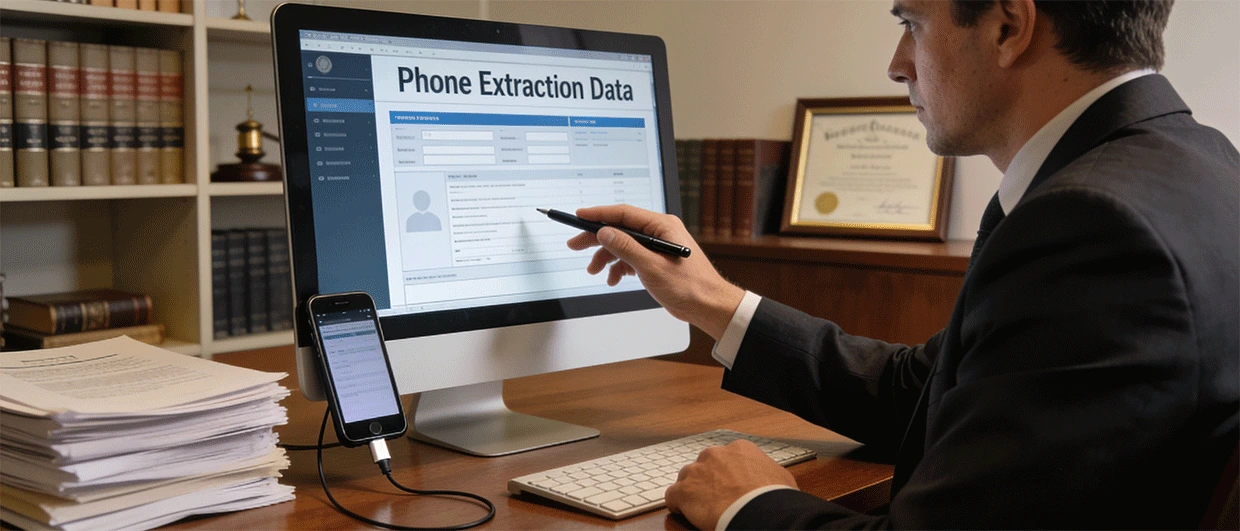
Attorney reviewing cell phone extraction evidence

In a growing share of criminal cases, the decisive evidence is digital, from phone extractions and location data to messages, app activity, and computer images. In most instances, that evidence is collected, analyzed, and interpreted by the State before it ever reaches the defense, leaving attorneys with a report and a large volume of data but little independent scrutiny of how the evidence was obtained or what it truly reveals.

An independent forensic review helps close that gap by examining the collection process, validating the findings, and identifying evidence that may have been overlooked, misinterpreted, or taken out of context. Understanding what an independent examiner can and cannot do is an important part of building an informed defense strategy. Here is a high-level overview of what to expect from the process.

The State’s forensics deserve a second look

Extractions and forensic reports are produced by people and tools, and both make mistakes. Tools flag artifacts that still need human interpretation; analysts sometimes draw conclusions the underlying data doesn’t fully support; and the report rarely highlights what would help the defense. An independent review checks the work. Was the extraction complete? Were the artifacts read correctly? Do the conclusions actually follow from the data?

Data on a device is not proof of who acted

A message, a file, a search, a location ping shows what happened on a device, not necessarily who was holding it. Shared and borrowed devices, synced accounts, automated background activity, and remote access all sit between “the data exists” and “the defendant did it.” Attribution is frequently the weakest link in a digital case, and the one most worth pressing.

Consider what stands between data found on a phone and proof that a specific person acted: a shared or borrowed device, an account synced from somewhere else, automated or background app activity, someone else logged in, or remote access and malware. Evidence on a device shows the device. Tying it to a person is a separate question.

Digital evidence can exonerate, and it’s perishable

The same data the State relies on can also contradict its timeline, place your client elsewhere, or supply missing context. But favorable evidence disappears too. Accounts close, devices get wiped or returned, messages auto-delete. Moving early to identify and preserve exculpatory electronic evidence is often as important as challenging the State’s version of it.


Sometimes the most important thing in the data is what the State’s report never mentions.


What an independent review gives you

  • Independent review of the State’s extractions, reports, and conclusions.
  • Plain-English findings a judge or jury can actually follow.
  • Hard scrutiny of attribution, location data, and methodology.
  • Help making sense of massive phone and device dumps in discovery.
  • Defensible expert analysis and testimony when a case calls for it.

About Black Dog Forensics

We provide independent digital forensic and expert witness services for defense attorneys, litigation teams, and investigators nationwide: mobile device and computer forensics, cloud and social media analysis, location and metadata examination, review of opposing extractions and reports, and independent expert testimony. Our focus is defensible methodology, clear communication, and findings that hold up under scrutiny.

Have a case with digital evidence you want a second look at? Work with our team.

frequently asked questions

When should a lawyer involve a digital forensics expert during a legal case?

Attorneys should involve a digital forensics expert as early as possible, ideally during the pre-litigation or discovery phase. Early engagement allows the expert to help shape discovery strategies, identify potential sources of electronically stored information (ESI), and ensure proper evidence preservation from the outset.

This proactive approach can prevent spoliation issues, reduce the risk of inadmissible data, and strengthen the legal position with expert guidance on data scope, relevance, and authenticity. Forensic input at this stage also supports well-founded subpoenas, depositions, and early case assessments.

Can digital forensic consultants assist with legal discovery and data scope refinement?

Yes. Digital forensic consultants play a critical role in guiding attorneys through the complexities of ESI during discovery. Our experts assist in defining data parameters such as date ranges, file types, custodians, and communication channels—to avoid over-collection and reduce legal spend. We help draft targeted discovery requests that minimize data noise and maximize evidentiary value.

By aligning technical insight with legal goals, we ensure the collection is both efficient and defensible, helping streamline review workflows and reduce the risk of overlooking key digital evidence.

How do I know if digital forensics is relevant to my litigation or investigation?

Digital forensics becomes relevant any time electronically stored information may impact the outcome of a case. If your matter involves deleted emails, suspected document tampering, employee misconduct, insider threats, unauthorized access to confidential data, or disputes over device usage, forensic analysis is essential. It is also vital in cases with metadata discrepancies, competing expert reports, or the need to authenticate communications.

We offer initial consultations to evaluate whether forensic support can uncover hidden data, establish timelines, or validate evidence to support your argument or defense.

How do digital forensic experts ensure evidence is admissible in court?

We follow rigorous protocols grounded in legal and technical standards, ensuring our findings meet evidentiary requirements in both civil and criminal court. This includes:

  • Forensically sound imaging (bit-for-bit duplication) to preserve original data without alteration.
  • Cryptographic hash validation to confirm image integrity.
  • Meticulous chain of custody documentation to track data handling from acquisition to presentation.
  • Neutral, clearly written reports that align with legal expectations and expert witness standards.

These practices align with the Federal Rules of Evidence and are accepted in local, state, and federal courts, reinforcing the credibility and admissibility of our work.

Can you recover deleted emails or prove file access in a digital investigation?

Yes. Our forensic experts can recover deleted emails, even those removed from trash folders or email servers, depending on system configurations and data retention policies. We also analyze file system logs, metadata, and audit trails to determine who accessed, modified, deleted, or attempted to conceal key files.

These findings can demonstrate unauthorized access, prove insider activity, or discredit opposing claims. Such analysis is often pivotal in matters involving fraud, intellectual property theft, employment disputes, and cybersecurity incidents.