


 346-200-6097
Your Legal Rights After Discovering a Hidden Camera in an Airbnb
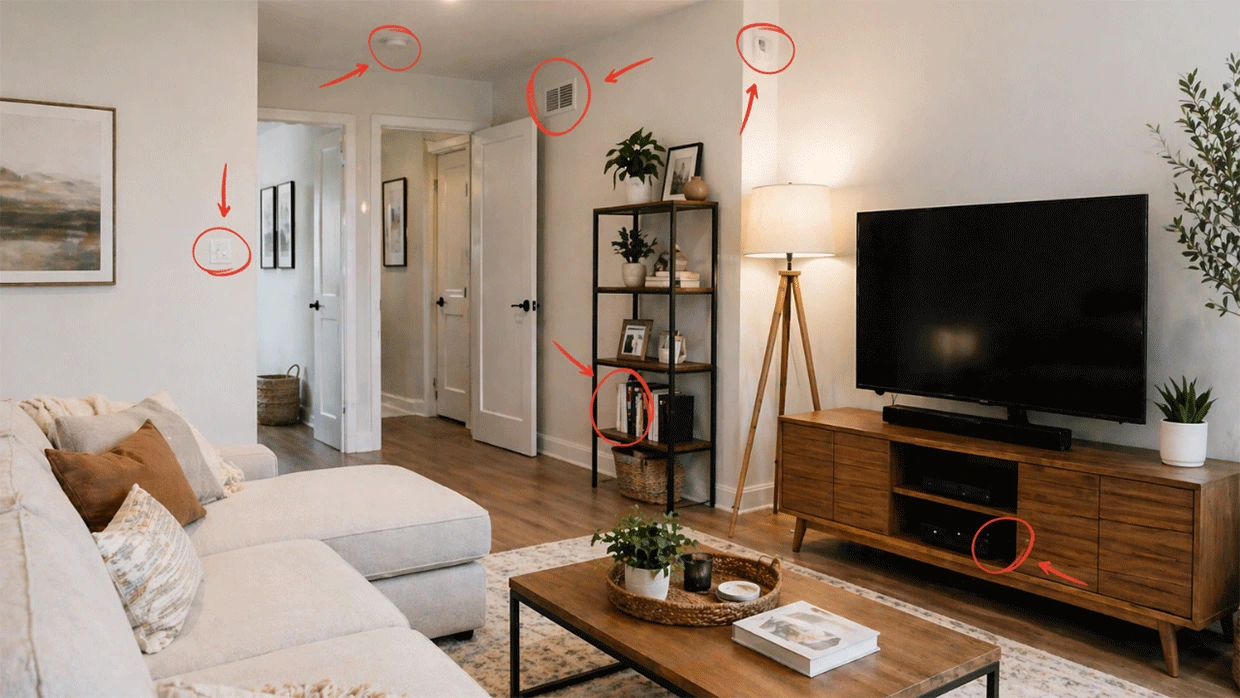
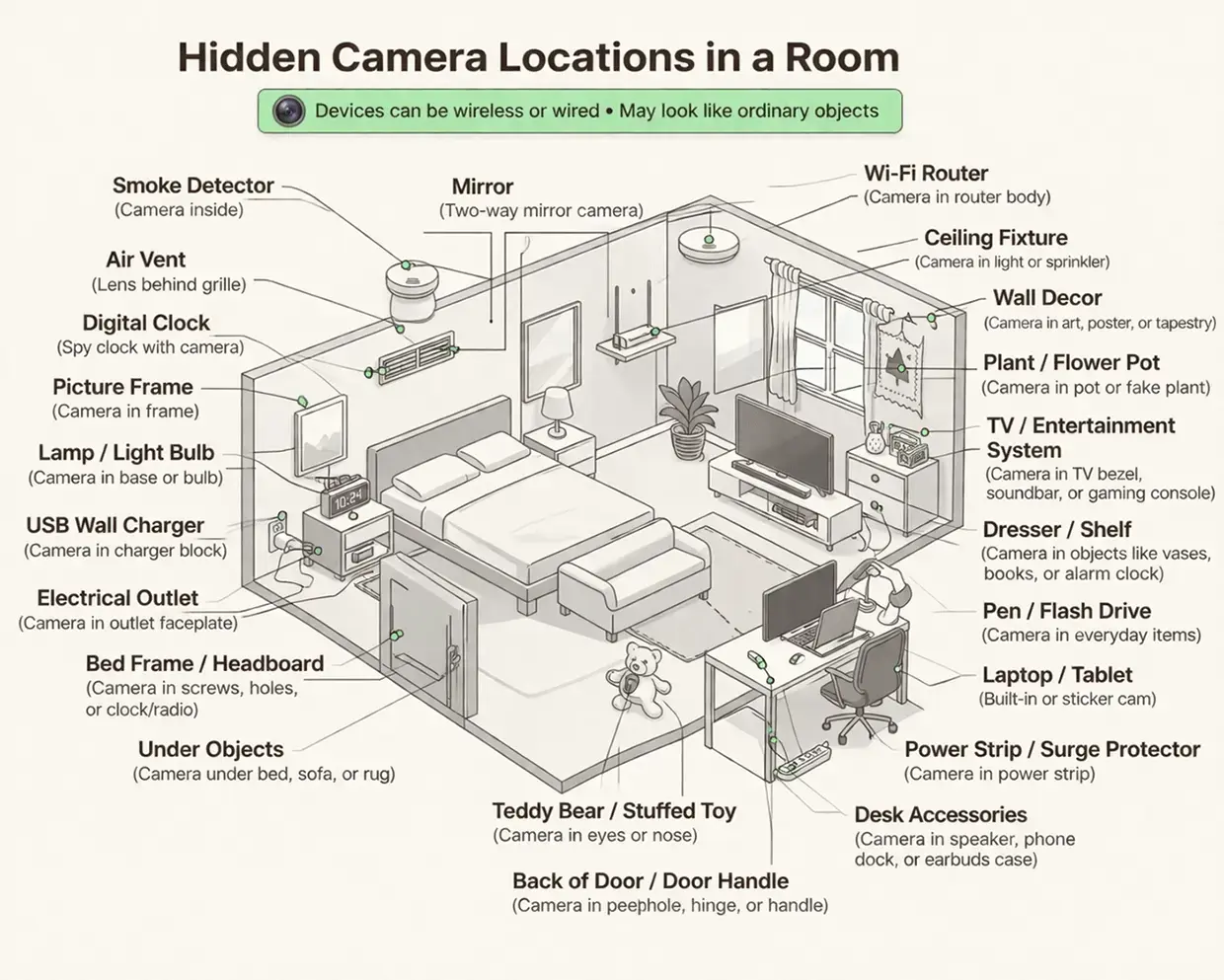
You have just checked into your Airbnb after a long flight. You drop your bags in the bedroom, use the bathroom, and then something catches your eye. A tiny lens peeking out from the vent above the shower. Your stomach drops. You have been recorded in the most private of spaces.
This scenario plays out more often than most travelers realize. When it happens, victims face immediate questions. Is this illegal? Who is responsible? What should I do right now to protect my rights? And how do investigators determine who put the camera there?
At Black Dog Forensics, we have handled digital evidence in these cases. The legal landscape is complex, involving Texas criminal statutes, civil liability theories, and technical forensic challenges that can make or break a case.
This guide explains what Texas law says about hidden cameras in short-term rentals, how these cases are investigated, and what victims should do to preserve evidence and protect their rights.
Is It Illegal to Record Someone in an Airbnb Under Texas Law?
Yes. Recording someone without their consent in a private space violates Texas Penal Code Section 21.15, which criminalizes "invasive visual recording." This statute specifically targets non-consensual recording in bathrooms, bedrooms, and other spaces where people have a reasonable expectation of privacy.
What Texas Penal Code §21.15 Says About Invasive Visual Recording
The statute defines invasive visual recording as photographing, videotaping, or electronically recording another person under specific circumstances. The law requires proof that the recording was made (1) without the subject's consent and (2) with intent to invade their privacy.
Under Section 21.15(b), three distinct acts constitute the offense:
- Recording the "intimate area" of another person when that area is not visible to the public
- Recording another person in a place where they have a reasonable expectation of privacy
- Promoting such recordings, knowing their character and content
The statute defines "intimate area" to include the naked or clothed genitals, pubic area, anus, buttocks, or female breast. A "place with a reasonable expectation of privacy" specifically includes bathrooms and bedrooms, which covers virtually all hidden camera discoveries in Airbnb rentals.
Critically, Section 21.15(e) clarifies that posted signs or notices do not establish consent. Even if a host claims they disclosed cameras, recording private spaces remains illegal.
Where Expectation of Privacy Applies
In an Airbnb or short-term rental, the expectation of privacy analysis is straightforward:
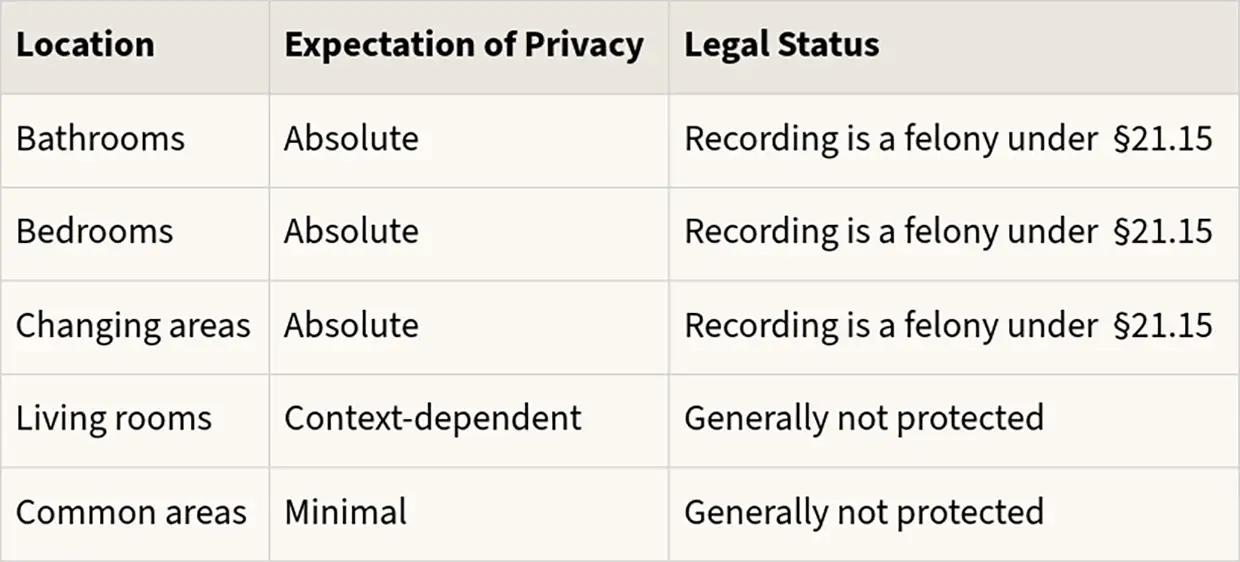
The Texas State Law Library confirms that bathrooms and bedrooms receive absolute privacy protection under Texas recording laws. This applies regardless of whether the space is a hotel room, Airbnb rental, or private residence.
Criminal Penalties and Felony Classification
Invasive visual recording is a state jail felony under Texas law. This classification carries:
- 180 days to 2 years in state jail
- Fine up to $10,000
While not a third-degree felony (which carries 2-10 years), the state jail felony classification still creates a permanent criminal record with significant collateral consequences.
Enhanced penalties may apply if the perpetrator distributes the recordings. Section 21.16 (unlawful disclosure of intimate visual material) creates separate criminal liability for sharing recordings without consent, commonly called the "revenge porn" statute.
Who Can Be Held Criminally and Civilly Liable?
Liability in hidden camera cases is not always straightforward. The person who placed the device may face criminal charges, but civil liability can extend to property owners and even platforms like Airbnb.
Host Liability
Property owners who install hidden cameras face direct criminal prosecution under §21.15. They may also face civil claims for:
- Invasion of privacy (intrusion upon seclusion)
- Negligent infliction of emotional distress
- Intentional infliction of emotional distress
However, hosts often claim they did not place the device. This raises the attribution problem: if the host denies responsibility, who is liable?
Guest and Third-Party Liability
Previous guests, cleaning staff, contractors, or maintenance workers may have placed the camera. In these cases:
- The actual perpetrator faces criminal charges if identified
- The property owner may still face civil liability for failing to detect the device
- Attribution becomes a central forensic challenge
Determining who placed the device requires technical forensic analysis (discussed below). Without proper attribution, victims may struggle to identify the proper defendant for criminal charges, though civil claims against the property owner may still proceed.
Airbnb's Role and Liability Exposure
Airbnb updated its policy in April 2024 to ban all indoor cameras globally. However, a 2024 CNN investigation revealed significant enforcement gaps:
- Airbnb does not inspect properties for compliance
- The company generated 35,000 surveillance-related support tickets between 2013-2023
- Airbnb does not routinely notify law enforcement when guests report cameras
Airbnb may face negligence claims if it fails to screen hosts with prior violations. A South Carolina jury awarded $45 million against an Airbnb property owner who recorded guests, and courts have allowed claims against the platform to proceed when hosts had histories of similar misconduct.
How Forensic Experts Investigate Hidden Camera Cases
The forensic investigation process distinguishes these cases from typical property disputes. Proper digital evidence handling can determine whether a case succeeds or fails in court.
Physical Device Identification and Collection
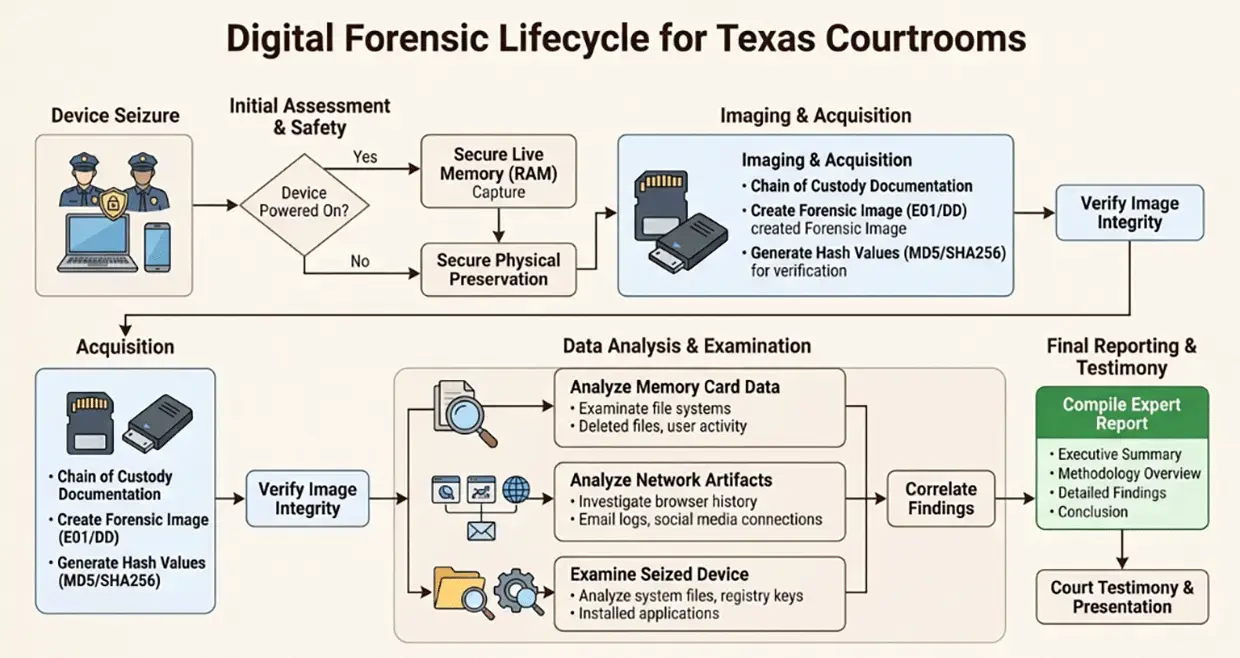
When we investigate hidden camera cases, the priority is preserving evidence integrity through a proper chain of custody:
- Document the device's exact location and condition through photography
- Collect the device without altering stored data
- Create forensic images of memory cards and internal storage
- Extract device metadata, including timestamps, serial numbers, and configuration data
Memory cards often contain the most critical evidence: the recordings themselves. But they also contain metadata that can establish when recordings were made, helping correlate device placement with specific guest stays.
Digital Evidence analysis
Modern hidden cameras often have network capabilities. Our forensic analysis examines:
- Network artifacts: Wi-Fi connection logs, IP addresses, and router data showing remote access
- Cloud storage connections: Whether the device transmitted footage to external servers
- File recovery: Deleted recordings that may still exist in unallocated storage space
- Transmission analysis: Whether the device was actively streaming or merely recording locally
This technical analysis can reveal whether a host was actively monitoring guests in real-time, which significantly impacts both criminal and civil liability.
Attribution Investigation
Determining who placed the device is often the most challenging aspect of these cases. We employ several forensic techniques:
- Booking history correlation: Cross-referencing recording timestamps with guest reservation dates
- Fingerprint and DNA collection: Physical evidence from the device itself
- Purchase history tracing: Identifying who bought the device through retailer records
- Timeline reconstruction: Building a comprehensive chronology of guest stays and device activity
Fingerprint evidence is particularly valuable. Most hidden cameras require physical handling during installation. Proper forensic collection can yield identifiable prints even weeks after installation.
Why Attribution Matters for Civil and Criminal Cases
Attribution affects both criminal and civil proceedings differently:
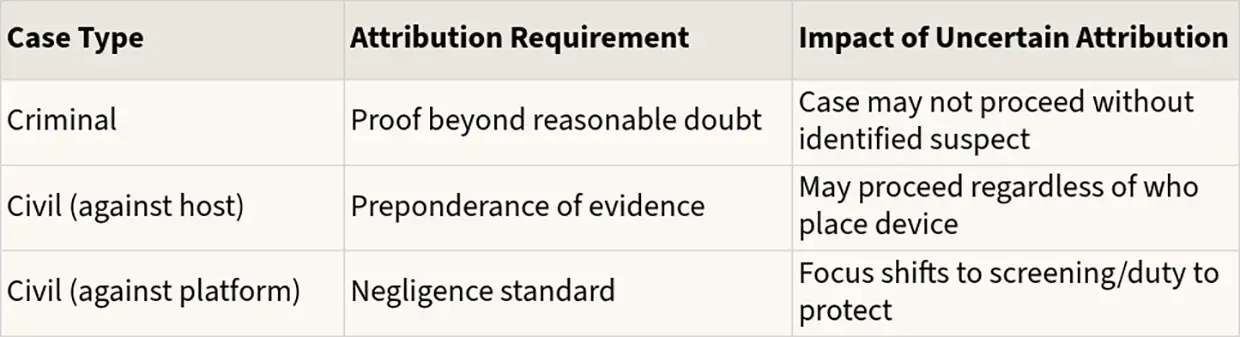
In civil cases, property owners may be liable under premises liability theories even if a third party placed the device. The key question becomes whether the owner exercised reasonable care to inspect the property and protect guests.
What to Do Immediately If You Find a Hidden Camera
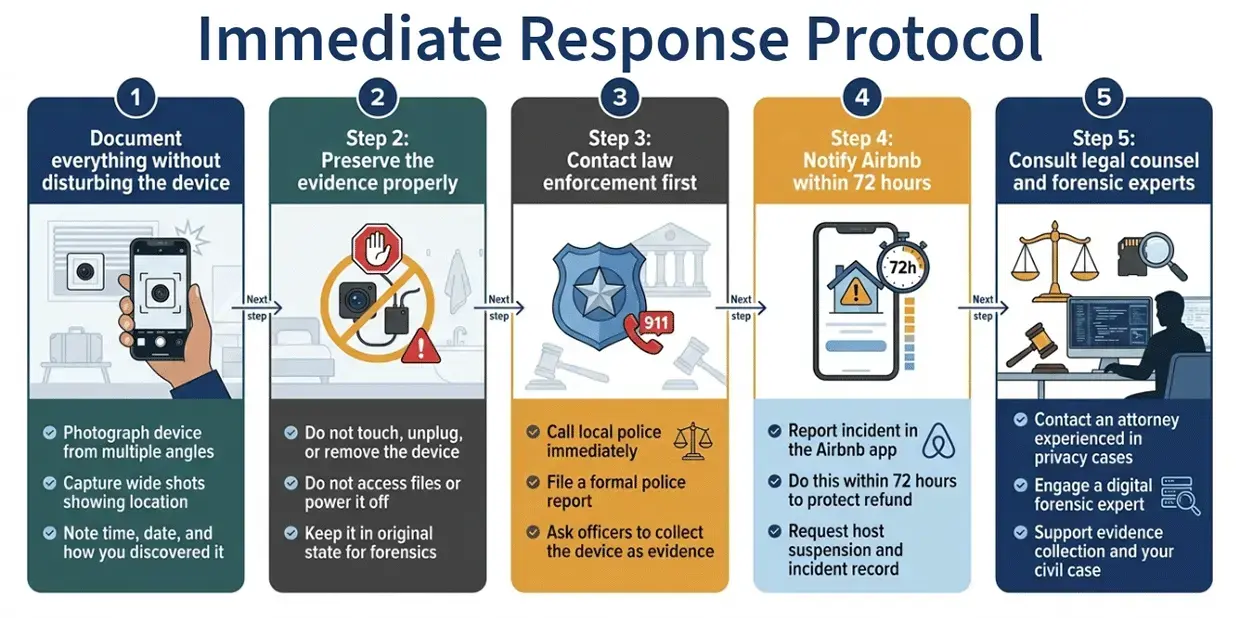
The first hours after discovering a hidden camera are critical. Your actions can preserve evidence or inadvertently destroy it.
Step 1: Document Everything Without Disturbing the Device
Take clear photographs of the device from multiple angles. Capture wide shots showing the device's location within the room. Note the exact time, date, and circumstances that led to your discovery. These details establish the device's original placement and become crucial evidence.
Step 2: Preserve the Evidence Properly
Do not touch, unplug, or remove the device. Do not attempt to access files or memory cards. Do not power off the device if it appears to be on. Law enforcement needs the device in its original state to build a case. Moving or accessing the device can compromise forensic evidence and the chain of custody.
Step 3: Contact Law Enforcement First
Call local police before notifying Airbnb. File a formal police report and request that officers collect the device as evidence. A 2024 CNN investigation found that Airbnb may contact the host during its internal investigation, potentially giving suspects time to destroy evidence before police can investigate.
Step 4: Notify Airbnb Within 72 Hours
After contacting the police, report the incident through Airbnb's app. The company requires reports within 72 hours to preserve refund eligibility. Request that the host be suspended pending investigation. Airbnb's response creates an official record that may help other guests avoid similar violations.
Step 5: Consult with Legal Counsel and Forensic Experts
Contact an attorney experienced in privacy litigation. Consider engaging a forensic expert to preserve digital evidence and provide expert witness testimony. Early involvement allows experts to advise law enforcement on proper evidence collection and begin building your civil case.
Common Mistakes That Harm Cases
- Removing or powering off the device
- Attempting to view recorded files
- Delaying law enforcement notification
- Failing to document the scene
- Contacting the host before the police
Civil Remedies and Compensation for Victims
Beyond criminal prosecution, victims can pursue civil damages through several legal theories.
Types of Damages Available
Victims may recover:
- Compensatory damages for emotional distress, anxiety, and therapy costs
- Economic damages for medical bills and lost wages, and relocation expenses
- Punitive damages when the conduct is willful or malicious
A South Carolina jury awarded $45 million to victims of an Airbnb hidden camera incident. The Erin Andrews case resulted in a $55 million verdict against a hotel and a stalker. While results vary, substantial damages are available when privacy violations cause severe emotional harm.
Legal Theories for Recovery
Common claims include:
- Invasion of privacy (intrusion upon seclusion)
- Negligent infliction of emotional distress
- Intentional infliction of emotional distress
- Premises liability against property owners
Each theory has different elements and proof requirements. An experienced attorney can evaluate which claims fit your specific circumstances.
Statute of Limitations Considerations
Texas law imposes time limits for filing civil claims. The limitations period varies based on the legal theory:
- Invasion of privacy: Generally, 2 years from discovery
- Negligent infliction of emotional distress: Generally, 2 years from the incident
- Intentional torts: Generally, 2 years
The "discovery rule" may extend limitations periods if the victim did not immediately know about the recording. However, prompt legal consultation preserves all available options.
Protect Your Rights with Professional Forensic Support
Hidden camera cases require specialized expertise at the intersection of criminal law, civil litigation, and digital forensics. The technical complexity of evidence preservation, attribution analysis, and expert testimony makes these cases challenging for both victims and attorneys.
At Black Dog Forensics, we provide comprehensive digital forensic services for hidden camera investigations. Our work includes:
- Evidence preservation with a court-admissible chain of custody
- Digital device analysis, including memory card forensics and network artifact examination
- Attribution investigation using technical and physical evidence
- Expert witness testimony for criminal and civil proceedings
- Litigation support for attorneys handling these complex cases
We understand the sensitive nature of these violations and the critical importance of handling evidence properly from the first moment. Our forensic methods meet the rigorous standards required for courtroom admission, ensuring that digital evidence tells the right story.
If you have discovered a hidden camera in an Airbnb or short-term rental, contact Black Dog Forensics immediately. Early involvement allows us to preserve critical evidence, support law enforcement investigations, and build the strongest possible foundation for your civil claims.

