


 346-200-6097
What Digital Evidence Can—and Cannot—Tell Us After a Suspected Suicide

Losing someone to suspected suicide leaves families searching for answers that may never fully come. The digital footprint left behind on phones, computers, and online accounts can provide crucial insights, but it is important to understand both what this evidence can reveal and what remains beyond its reach.
Digital forensics cannot answer every question about why someone made the choices they did. It cannot always reveal intent or emotional state with certainty. What it can do is document the digital artifacts left behind, reconstruct timelines, and identify potential contributing factors that may have played a role.
This guide serves two distinct audiences: families seeking closure and understanding, and attorneys handling wrongful death cases, criminal defense, or civil liability matters. Both need clear, factual information about digital forensics capabilities and limitations in these sensitive investigations.
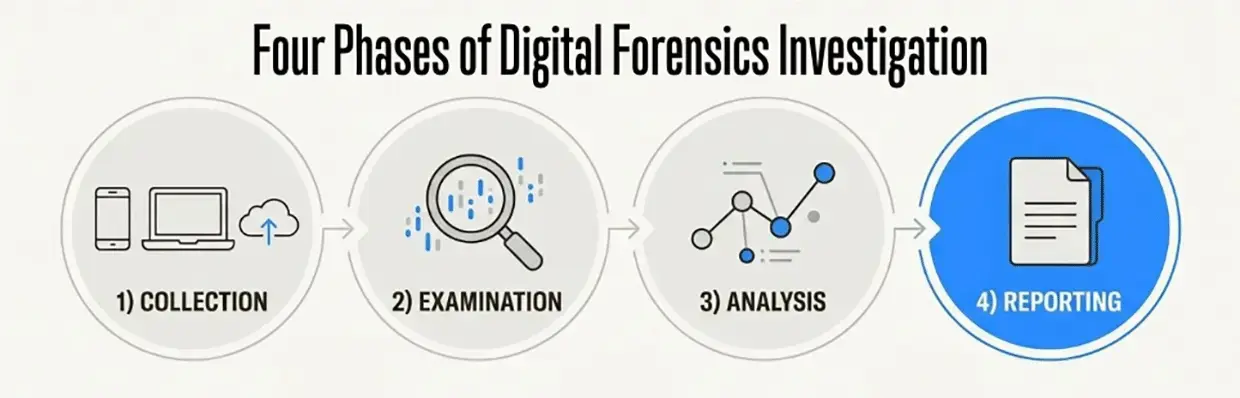
What Digital Forensics Can Examine in Suicide Investigations
Digital forensics investigators can recover and analyze a wide range of electronic evidence from devices and accounts. Understanding what is potentially available helps set realistic expectations about what an investigation might uncover.
Communications and Messages
Text messages, including SMS and iMessage, often contain crucial context about a person's final communications. Even deleted messages may be recoverable depending on the device, backup settings, and how much time has passed.
Messaging apps present additional opportunities and challenges. Apps like WhatsApp, Signal, Telegram, and Snapchat each store data differently. Some maintain local copies that forensic tools can access. Others rely heavily on cloud storage or employ encryption that limits recovery options.
Social Media and Online Activity
Social media archives can reveal posts, comments, direct messages, and story archives that were shared publicly or privately. Platform policies vary on data retention, but many maintain records longer than users expect. Facebook, Instagram, Twitter/X, and TikTok can provide activity logs through legal process.
Search history offers particularly telling evidence in many cases. Browser searches, app queries, and even voice search histories may reveal research about methods, expressions of distress, or searches for help. This data is often recoverable from both devices and synced cloud accounts.
Location Data
GPS history, cell tower connections, and WiFi logs can reconstruct where a device traveled in the hours and days before death. This location data helps establish timelines and may reveal visits to unusual locations or avoidance of typical patterns.
Photo and video metadata often contains EXIF data showing when and where images were captured. Even if the visual content appears unremarkable, the timestamps and location stamps may prove valuable for timeline reconstruction.
Financial and Account Activity
Digital forensics can examine transaction histories, payment app records (Venmo, PayPal, Cash App), and cryptocurrency wallet activity. Unexplained financial transactions, sudden transfers, or gambling activity may indicate stressors or coercion.
Cloud account analysis extends beyond what appears on any single device. Google Drive, iCloud, OneDrive, and similar services may contain documents, backups, and version histories that reveal information not visible on phones or computers.
Reconstructing the Timeline of Final Activities
One of the most valuable capabilities of digital forensics is reconstructing a comprehensive timeline of a person's final digital activities. This reconstruction combines multiple data sources to create a coherent picture of what happened and when.
Last Known Device Activity
Forensic analysis can determine when a device was last used, what applications were active, and what actions were being taken. File system timestamps show when documents were created, modified, or accessed. Communication logs reveal the final messages sent and received.
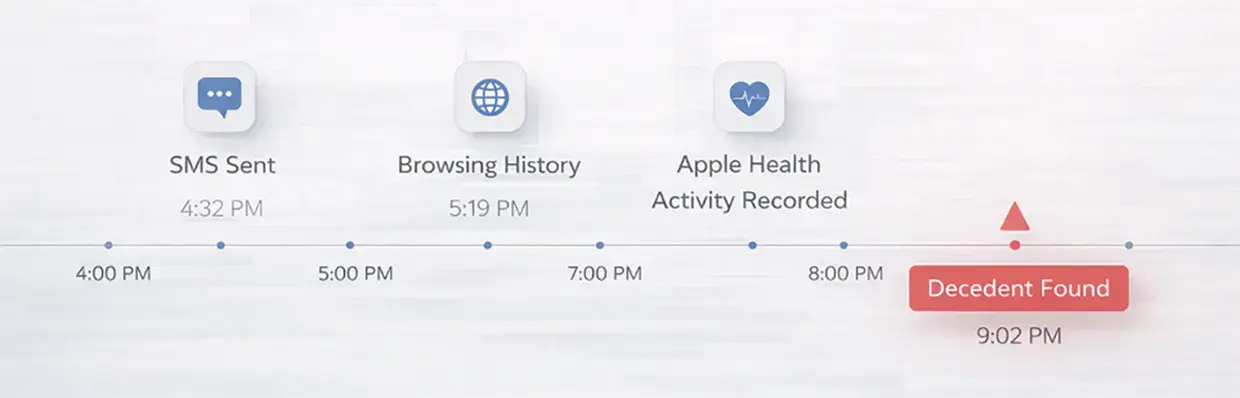
In some cases, this analysis reveals activity that continued after death would have occurred, suggesting another person accessed the device. In others, it confirms when communication ceased, helping establish a more precise timeline.
Communication Pattern Analysis
Changes in communication patterns often provide important context. Forensic analysis can identify:
- Sudden drops or spikes in messaging frequency
- Changes in communication timing (late-night activity, unusual hours)
- Shifts in tone or language patterns
- New contacts or blocked numbers
- Deletion of conversation threads
These patterns, viewed objectively, may suggest external pressures, relationship conflicts, or internal struggles that were not apparent to those close to the deceased.
Identifying Gaps and Anomalies
Sometimes what is missing proves as important as what exists. Digital forensics can identify:
- Deleted messages or entire conversation threads
- Gaps in expected location data
- Device wipes or factory resets
- Missing time periods in activity logs
- Unusual account access from unfamiliar locations
These anomalies warrant closer investigation. A factory reset performed shortly before death, for example, raises questions about what was removed and why.
Identifying Potential Contributing Factors Through Digital Evidence
Digital forensics can reveal indicators of external pressures or harmful interactions that may have contributed to a person's decision. This evidence requires careful interpretation, but it can provide crucial context for understanding what happened.

Evidence of Bullying or Harassment
Online harassment leaves digital traces that forensic analysis can uncover. Direct evidence includes threatening or harassing messages, coordinated campaigns against the victim, impersonation accounts, and doxxing (publication of personal information).
Indirect indicators may include sudden changes in privacy settings, blocking of multiple accounts, creation of new anonymous profiles, or documented screen recording activity suggesting the person was collecting evidence of abuse.
Research published in Science & Justice demonstrates the importance of objective analysis in these cases. A study of 58 experienced crime scene investigators found that prior information about a case (whether it was framed as "suicide" or "violent death") influenced how they interpreted identical evidence. This confirmation bias risk makes professional, objective forensic analysis essential.
Sextortion and Coercion Indicators
Sextortion cases involve perpetrators threatening to share intimate images unless victims comply with demands (typically for money or additional images). Digital forensics can identify:
- Actual communications with a bad actor
- Screenshots of threatening communications that are reported to be shared
- Payment demands and transaction records
- Evidence of image sharing or threats
- Pressure tactics with specific deadlines
- Requests for secrecy or isolation

The National Center for Missing & Exploited Children (NCMEC) maintains protocols for handling such evidence, emphasizing immediate preservation of screenshots with timestamps and metadata intact.
Online Exploitation and Grooming
For younger victims, digital evidence may reveal grooming or exploitation by adults. Warning signs in recovered communications include:
- Age-inappropriate relationships or attention from adults
- Requests to keep conversations secret from family
- Gradual isolation from friends in communications
- Requests for intimate images or videos
- Transfer of money or gifts
These patterns, when documented through digital forensics, may support criminal charges against perpetrators or civil liability claims against platforms that failed to protect users.
Financial Pressure Indicators
Digital financial records can reveal stressors, including:
- Gambling losses or frequent betting activity
- Unusual money transfers or requests
- Signs of fraud or scams
- Sudden financial desperation
- Cryptocurrency losses
While financial stress alone rarely explains suicide, it often combines with other factors to create overwhelming pressure.
What Digital Forensics Cannot Determine
Understanding the limitations of digital forensics is as important as understanding its capabilities. Professional forensic experts must communicate these limits clearly to maintain credibility and ensure realistic expectations.
Intent and Internal State
Digital evidence documents behavior, not internal mental states. A search about suicide methods documents that a search occurred, but it does not reveal whether the person was genuinely planning suicide, researching for a school project, or seeking help for intrusive thoughts.
Similarly, final communications may sound resigned or peaceful without revealing the internal struggle that preceded them. Digital forensics provides the "what" and "when" but cannot reliably answer "why."
Causation and Responsibility
Even when digital evidence reveals bullying, harassment, or sextortion, establishing legal causation requires additional investigation. The evidence shows these factors were present, but determining their contribution to the outcome involves complex psychological and legal analysis that digital forensics alone cannot provide.
Coercion Versus Voluntary Action
Determining whether a suicide note or final message was written voluntarily or under coercion presents particular challenges. While forensic analysis can sometimes identify unusual writing patterns or circumstances suggesting duress, it cannot definitively distinguish voluntary from coerced communications without additional context.
Complete reconstruction
Digital forensics rarely provides a complete picture. Encryption, deleted data, privacy settings, and platform limitations all create gaps. The evidence that remains must be interpreted within these constraints.
Legal considerations for attorneys
Attorneys handling cases involving suspected suicide face unique challenges in preserving and presenting digital evidence. Understanding these requirements early can prevent costly mistakes.
Evidence Preservation Requirements
The legal concept of spoliation applies to digital evidence just as it does to physical evidence. Once litigation is reasonably anticipated, parties have a duty to preserve relevant electronic information. Failure to do so can result in adverse inference jury instructions or sanctions.
Key preservation steps include:
- Immediate forensic imaging of devices
- Preservation of cloud accounts and associated data
- Suspension of automatic deletion policies
- Documentation of preservation efforts
- Notification to relevant custodians
Subpoenas and Platform Data
Obtaining records from technology companies requires navigating complex legal frameworks. The Stored Communications Act (SCA) governs access to electronic communications stored by service providers, with different requirements depending on data age and type.
Platform response times typically range from 10 to 90 days, though emergency disclosures are possible in imminent danger situations. Attorneys should request:
- Profile data and account information
- Message content and metadata
- Location history and IP logs
- Device access records
- Deleted content retained in backup systems
Identifying Third-Party Actors
Digital forensics can help identify anonymous harassers or extortionists through:
- IP address tracking
- Device fingerprinting
- Cross-platform correlation of usernames and patterns
- Financial transaction tracing
- Geolocation data analysis
These investigations often require coordination with law enforcement or international legal process when actors are located overseas.
Civil Liability Considerations
In wrongful death cases, digital evidence may support claims against:
- Schools that failed to address known bullying
- Social media platforms that allowed harassment to continue
- Individuals who engaged in sextortion or coercion
- Employers who created intolerable working conditions
The evidence needed varies by theory of liability, making early consultation with digital forensics experts essential for case planning.
Common Challenges in Suicide-Related Digital Forensics
Every digital forensics investigation faces obstacles. Cases involving suspected suicide present particular challenges that families and attorneys should understand.
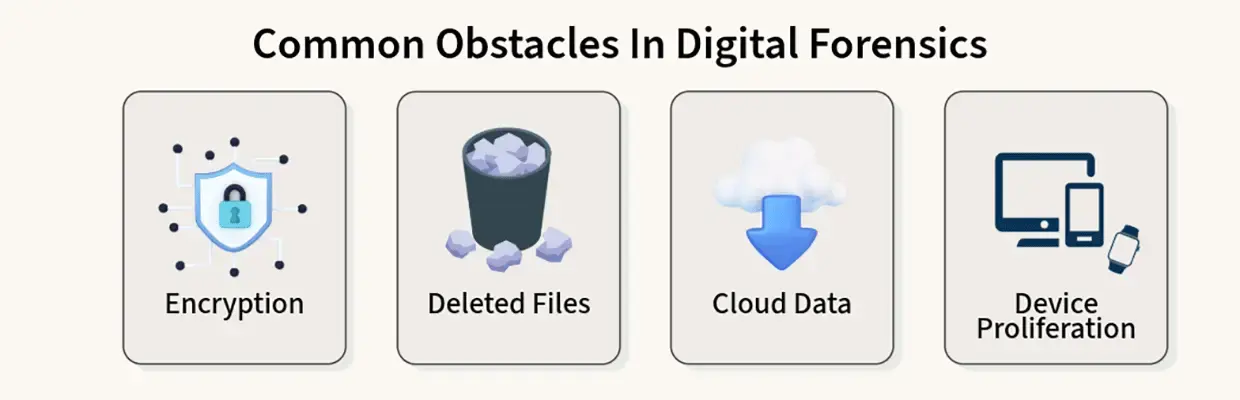
Encryption and Access Barriers
Modern devices employ encryption that may prevent access without passwords or biometric authentication. While forensic tools can sometimes bypass these protections, success is not guaranteed. iPhones running recent iOS versions and Android devices with encryption enabled present significant challenges.
Deleted Data and Overwriting
When users actively delete content, recovery becomes more difficult. Secure deletion utilities, factory resets, and extended time periods between deletion and forensic acquisition all reduce recovery likelihood. The sooner devices are preserved, the better the chances of recovering deleted information.
Platform Limitations
Different platforms retain data for varying periods:
- Snapchat: Opens and unopened snaps have different retention periods
- Signal: Minimal server retention by design
- Telegram: Cloud chats retained, secret chats not
- iMessage: Retained on devices and in iCloud if enabled
Understanding these limitations helps set realistic expectations about what evidence may exist.
Privacy Settings and Account Access
Strong privacy settings and unknown passwords can limit access to accounts. While legal process can compel platform disclosure, this takes time and does not always yield complete records.
Multiple Devices and Fragmented Footprints
Most people use multiple devices (phone, computer, tablet, gaming consoles) and numerous online accounts. Comprehensive analysis requires examining all potential sources, which can be time-consuming and expensive.
What Families Should Do: Immediate Preservation Steps
Families facing the immediate aftermath of a suspected suicide can take steps to preserve digital evidence while navigating their grief. These actions help ensure that if questions arise later, the digital evidence will be available.
Preserve Device State
Secure all devices in a safe location where they will not be accessed by others. This includes:
- Mobile phones and tablets
- Computers and laptops
- Gaming consoles
- Smartwatches and fitness trackers
- USB drives and external storage
- Digital cameras
Avoid Altering Accounts or Content
Resist the urge to:
- Read through messages or emails
- Delete any content, even if it seems unimportant
- Post about the situation on social media
- Close or deactivate accounts
- Accept friend requests or messages from unknown accounts
Any of these actions can alter evidence, trigger notifications that alert third parties, or create legal complications later.
Document What You Know
Create a simple inventory of:
- Device types and locations
- Known passwords (without attempting to use them)
- Cloud accounts and associated email addresses
- Social media accounts
- Financial apps and services
- Known online activities or concerns
This documentation helps forensic experts prioritize their efforts when they begin their work.
Contact Qualified Professionals
Digital forensics is not a DIY activity. Qualified professionals have the tools, training, and legal knowledge to preserve evidence properly. Look for experts with:
- Experience in death investigations
- Proper certifications (EnCE, GCFE, CFCE, or similar)
- Understanding of legal requirements for evidence handling
- Ability to testify as expert witnesses if needed
At Black Dog Forensics, we specialize in these sensitive cases, providing families and attorneys with the clarity that digital evidence can offer while respecting the limitations of what can be known.
Key Takeaways for Families and Attorneys
Digital forensics offers powerful tools for understanding the circumstances surrounding suspected suicide, but these tools have real limitations. Here is what to remember:
- Digital forensics documents behavior, not intent. Evidence shows what happened on devices, not why decisions were made. However, evidence is often found that can be used to help determine why events might have happened.
- Preservation is time-sensitive. The sooner devices are secured and professionally examined, the more evidence can be recovered.
- Objective analysis requires professional expertise. Confirmation bias is a real risk that trained experts work actively to avoid.
- Evidence must be handled properly for legal use. Chain of custody and proper procedures matter for admissibility.
- Cyberbullying and sextortion leave traces. Digital forensics can identify external pressures that may have contributed.
- Limitations are real and must be acknowledged. No forensic examination can answer every question.
Finding Answers Through Digital Evidence
The aftermath of a suspected suicide leaves families searching for understanding and attorneys building cases that require facts rather than speculation. Digital forensics offers a path to clarity, but it is a path with boundaries.

Objective analysis of digital evidence can reveal what happened, when it happened, and what external factors may have played a role. It can identify bullies, extortionists, and others who may bear responsibility. It can reconstruct timelines and recover conversations that provide context.
What it cannot do is reveal the internal experience of the person who died. It cannot explain the full complexity of why someone made an irreversible decision. For that, families must find their own path to acceptance, supported by whatever answers the evidence can provide.
At Black Dog Forensics, we understand the weight of these investigations. We approach each case with the precision that legal proceedings demand and the sensitivity that grieving families deserve. Our methodology follows court-admissible standards because we know our findings may one day be presented in courtrooms where justice is sought.
If you are facing questions that digital evidence might answer, we can help. Whether you are a family seeking closure or an attorney building a case, contact us to discuss how forensic analysis can support your search for truth within the limits of what can be known.

